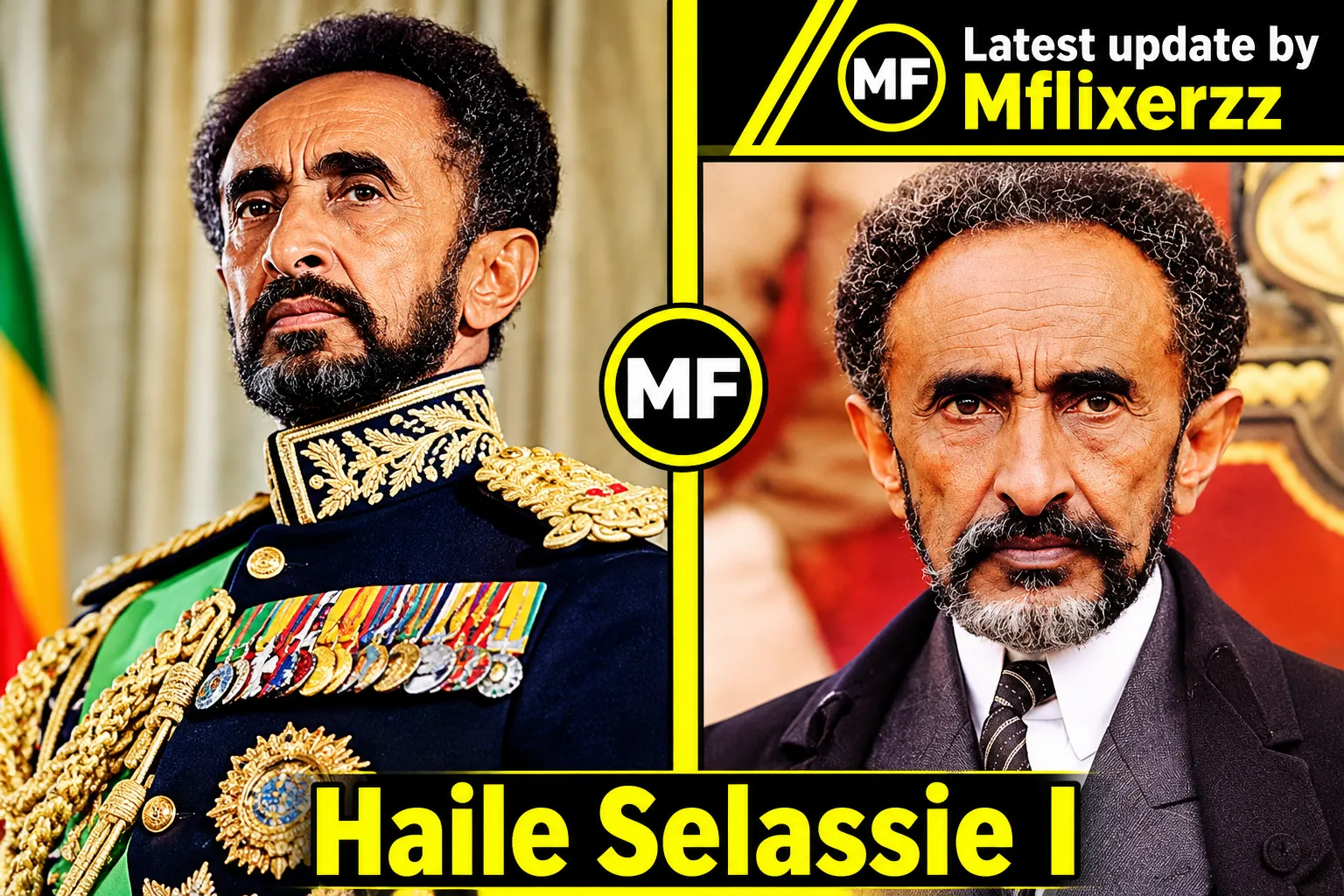
Haile Selassie I: Biography, Age, Wife, Children, Reign, History and Legacy
Haile Selassie I was the last reigning emperor of Ethiopia and one of the most influential African leaders of the twentieth century. Born Tafari Makonnen on July 23, 1892, he rose from Ethiopian nobility to become regent, king and ultimately emperor. His leadership was associated with Ethiopian modernization, international diplomacy, resistance against Italian occupation and the development of African unity.
He ruled Ethiopia from 1930 until 1974, except for the period of Italian occupation between 1936 and 1941, when he lived in exile. He became internationally recognised after his appeal to the League of Nations against Italy’s invasion and later played an important role in establishing the Organisation of African Unity.
Haile Selassie was also a significant religious and cultural figure because of his connection to the Rastafari movement. While he personally followed Ethiopian Orthodox Christianity, Rastafari believers interpreted his coronation and imperial titles through their own spiritual traditions.
His reign remains historically significant but also controversial. He introduced constitutional and administrative reforms, expanded education and strengthened Ethiopia’s international position, while his government was also criticised for centralised power, inequality and political restrictions. His reign ended in 1974 during a military revolution.
Quick Bio of Haile Selassie I
| Detail | Information |
| Full Name | Tafari Makonnen |
| Imperial Name | Haile Selassie I |
| Date of Birth | July 23, 1892 |
| Date of Death | August 27, 1975 |
| Age | 83 Years |
| Birthplace | Ejersa Goro, Harar Province, Ethiopia |
| Nationality | Ethiopian |
| Profession | Emperor, Political Leader, Diplomat |
| Father | Ras Makonnen Wolde Mikael |
| Mother | Yeshimebet Ali |
| Wife | Empress Menen Asfaw |
| Children | Seven commonly documented children |
| Religion | Ethiopian Orthodox Christianity |
| Dynasty | Solomonic Dynasty |
| Regency | 1916–1930 |
| Reign | 1930–1974 |
| Coronation | November 2, 1930 |
| Famous For | Ethiopian independence, modernization and African unity |
| Organization | Organisation of African Unity |
| Burial Place | Holy Trinity Cathedral, Addis Ababa |
| Net Worth | Not reliably documented |
Early Life and Childhood
Haile Selassie I was born Tafari Makonnen on July 23, 1892, in Ejersa Goro, near Harar in Ethiopia. He was born into a prominent aristocratic family whose connections to the Ethiopian imperial court helped shape his early life. His father, Ras Makonnen Wolde Mikael, was an influential nobleman, military leader and governor of Harar, while his mother, Yeshimebet Ali, belonged to a family connected to Ethiopian nobility.
Tafari’s childhood was shaped by the traditions of Ethiopian aristocracy, religious education and the political environment of the imperial court. Ethiopia was an independent country facing pressure from European colonial powers, and maintaining sovereignty was an important concern for its rulers.
His father was closely associated with Emperor Menelik II and participated in diplomatic and military affairs. Through this connection, Tafari grew up surrounded by discussions of government, leadership and the responsibilities of the Ethiopian nobility.
His mother died when he was very young, leaving his upbringing largely in the hands of household members, teachers and relatives. He received traditional religious education and later instruction in languages and administrative subjects.
As a young boy, Tafari was introduced to the expectations placed on members of the ruling class. He learned about Ethiopian history, religious traditions, government administration and the importance of political relationships.
His early life helped prepare him for the responsibilities he would eventually assume as regent and emperor.
Parents and Family Background
Father: Ras Makonnen Wolde Mikael
Ras Makonnen Wolde Mikael was one of the most influential Ethiopian noblemen during the late nineteenth and early twentieth centuries. He served as governor of Harar and was an important political and military figure during the reign of Emperor Menelik II.
Makonnen was known for his administrative responsibilities, military experience and diplomatic work. He represented Ethiopian interests in international affairs and played a role in strengthening the country’s political relationships.
He was closely connected to the imperial court and belonged to the Ethiopian aristocratic system. His position provided Tafari with early exposure to government and political responsibilities.
Makonnen also believed in education and encouraged his son to develop knowledge beyond traditional Ethiopian instruction. Tafari received lessons from religious teachers and tutors who introduced him to different languages and subjects.
Ras Makonnen died in 1906. His death was an important event in Tafari’s childhood because it left him without his father’s direct guidance at a time when he was beginning to develop his political future.
Nevertheless, his father’s reputation and political connections continued to influence Tafari’s career.
Mother: Yeshimebet Ali
Yeshimebet Ali was the mother of Tafari Makonnen. She came from a family connected to Ethiopian nobility and was part of the aristocratic environment in which Tafari was born.
Historical information about her personal life is relatively limited compared with the records available about her husband.
She died when Tafari was very young, and her absence influenced the circumstances of his upbringing.
Although she is not as widely documented in historical accounts, Yeshimebet remains an important part of Haile Selassie’s family background.
Education and Early Training
Tafari Makonnen received education from Ethiopian religious teachers and tutors who helped develop his knowledge of languages, history, religion and administration.
His early education included the study of Ge’ez, Amharic and French. Ge’ez was important in Ethiopian religious and cultural traditions, while French provided opportunities to understand international communication and diplomacy.
His father wanted him to receive an education that would prepare him for government responsibilities. Tafari therefore received instruction from teachers connected to Ethiopian religious institutions and European educational traditions.
His education also included practical experience. He was introduced to provincial administration and the responsibilities associated with governing territories.
Rather than relying only on classroom instruction, Tafari learned through appointments, political relationships and exposure to the workings of the imperial court.
These experiences helped him develop an understanding of government, diplomacy and leadership.
His education and early training played an important role in his rise through Ethiopia’s political system.
Early Political Career
Tafari began his political career during his teenage years. He received administrative responsibilities and gradually became involved in the political affairs of the Ethiopian Empire.
He served in provincial positions and gained experience in administration, taxation, military affairs and political relationships.
His appointments helped establish him as an influential young nobleman. He became known for his intelligence, attention to detail and interest in modern administrative practices.
The Ethiopian political system during this period involved powerful nobles, royal family members, military leaders and religious authorities. Political alliances and relationships were important in determining who held power.
Tafari gradually developed influence among important political groups.
In 1916, he became a central figure in the movement that removed Lij Iyasu from power. Following the political change, Empress Zewditu was placed on the throne, and Tafari became regent and heir to the imperial throne.
This appointment marked a major turning point in his political career.
Regent of Ethiopia
Tafari Makonnen became regent of Ethiopia in 1916 under Empress Zewditu. His position allowed him to exercise considerable political authority while the empress remained the formal ruler.
As regent, he worked to strengthen Ethiopia’s international relationships and introduce administrative changes.
He believed Ethiopia needed modern institutions, education and stronger diplomatic relationships to maintain its independence and improve its position in the world.
In 1923, Ethiopia joined the League of Nations. The membership was an important diplomatic achievement and reflected Tafari’s efforts to establish Ethiopia as an internationally recognised sovereign country.
In 1924, he travelled through several European countries, including France, Britain, Italy and Switzerland. The journey allowed him to observe modern infrastructure, educational systems, political institutions and military developments.
His international visit attracted attention and demonstrated the interest of Ethiopian leadership in modernization and diplomacy.
During his regency, Tafari became increasingly powerful. In 1928, he received the title of Negus, or king, while Empress Zewditu remained on the throne.
Following the empress’s death in 1930, Tafari became emperor.
Coronation as Haile Selassie I
On November 2, 1930, Tafari Makonnen was crowned Emperor of Ethiopia under the name Haile Selassie I.
The coronation ceremony took place in Addis Ababa and attracted representatives from several countries. It was an important event for Ethiopia because it demonstrated the country’s continued efforts to strengthen its international position.
Haile Selassie adopted the traditional imperial title of King of Kings of Ethiopia. His coronation was connected to the Solomonic dynasty, which traditionally traced its ancestry to King Solomon and the Queen of Sheba.
The dynasty’s historical and religious claims played an important role in the legitimacy of Ethiopian imperial rule.
Following his coronation, Haile Selassie began strengthening central government authority and introducing reforms. He wanted to modernize the country’s administrative institutions, improve education and strengthen Ethiopia’s international relationships.
His coronation marked the beginning of a reign that would last more than four decades, excluding the years of Italian occupation.
Marriage and Wife: Empress Menen Asfaw
Haile Selassie married Menen Asfaw in 1911. She later became Empress Menen Asfaw following his coronation in 1930.
Menen Asfaw was born into a prominent Ethiopian family. She was recognised for her religious devotion, charitable activities and involvement in social initiatives.
As empress, she supported charitable work and organisations connected to women, education, healthcare and religious institutions.
She became an important figure within the imperial household and was widely recognised for her public responsibilities.
The couple remained married until Menen’s death in 1962. Their marriage was associated with the traditions of the Ethiopian royal family and the political and cultural environment of the imperial court.
Empress Menen was remembered for her charitable activities, religious commitment and role during an important period of Ethiopian history.
Children and Family
Haile Selassie and Empress Menen had several children, and historical records commonly document seven children associated with Haile Selassie.
His children included Princess Romanework, Princess Tenagnework, Crown Prince Asfaw Wossen, Princess Zenebework, Princess Tsehai, Prince Makonnen and Prince Sahle Selassie.
His children were part of the imperial family and were involved in different aspects of Ethiopian royal life.
Princess Romanework
Princess Romanework was one of Haile Selassie’s daughters. She was married to Dejazmatch Beyene Merid and had children.
Her life was connected to the imperial family and the political circumstances surrounding Ethiopia’s invasion and occupation.
Princess Tenagnework
Princess Tenagnework was another daughter of Haile Selassie. She was a prominent member of the imperial family and experienced the political upheavals that affected Ethiopia during the twentieth century.
She remained connected to the royal family and lived through the end of the monarchy.
Crown Prince Asfaw Wossen
Crown Prince Asfaw Wossen, later known as Amha Selassie, was Haile Selassie’s eldest surviving son and the designated heir to the throne.
He was expected to succeed his father as emperor. However, following the overthrow of Haile Selassie in 1974, the monarchy was abolished, preventing his formal succession.
He later lived in exile and remained associated with the Ethiopian royal family.
Princess Zenebework
Princess Zenebework was one of Haile Selassie’s daughters. She married Haile Selassie Gugsa and died in 1934.
Princess Tsehai
Princess Tsehai was another daughter of Haile Selassie. She was involved in the imperial family and died in 1942.
Prince Makonnen
Prince Makonnen, Duke of Harar, was one of Haile Selassie’s sons. He held an important position within the royal family and died in 1957.
Prince Sahle Selassie
Prince Sahle Selassie was one of Haile Selassie’s sons. He was associated with the imperial family and died in 1962.
The royal family played an important role in Ethiopia’s political and social structure during Haile Selassie’s reign.
Italian Invasion of Ethiopia
One of the most defining events of Haile Selassie’s reign was the Italian invasion of Ethiopia in 1935.
Italy, under Benito Mussolini, sought to expand its colonial empire and invaded Ethiopia in October 1935. Italian forces used modern weapons, aircraft and chemical weapons against Ethiopian soldiers and civilians.
Ethiopian forces resisted the invasion, but the military imbalance made it increasingly difficult for the country to defend itself.
Haile Selassie remained a symbol of Ethiopian resistance. He attempted to defend the country’s independence and appealed to the international community for assistance.
The invasion represented a serious violation of international agreements and attracted worldwide attention.
Although Ethiopia was a member of the League of Nations, the organisation failed to prevent the Italian invasion or provide effective military assistance.
Italian forces eventually occupied Addis Ababa in May 1936, forcing Haile Selassie to leave Ethiopia.
The invasion marked a major turning point in his reign and the history of the Ethiopian Empire.
Exile and Appeal to the League of Nations
Following the Italian occupation, Haile Selassie went into exile. He spent much of his exile in Britain, where he continued to advocate for Ethiopia’s independence.
On June 1, 1936, he addressed the League of Nations in Geneva. His speech condemned the Italian invasion and called on the international community to defend the principles of collective security.
He argued that the failure to stop Italy would have consequences beyond Ethiopia and would weaken international peace.
His speech became one of the most widely remembered political addresses associated with the Italian invasion.
During his exile, Haile Selassie continued working with Ethiopian resistance groups and international supporters.
He remained determined to return to Ethiopia and restore its independence.
Return to Ethiopia in 1941
Haile Selassie returned to Ethiopia in 1941 during the East African campaign of the Second World War.
British forces and Ethiopian resistance fighters helped defeat Italian forces in the region. The campaign resulted in the restoration of Ethiopian sovereignty.
On May 5, 1941, Haile Selassie entered Addis Ababa, marking a major moment in the country’s history.
His return was widely celebrated by supporters of Ethiopian independence. The restoration of the emperor became a symbol of resistance against colonial occupation.
Following his return, he began rebuilding the government and restoring administrative institutions.
The country faced significant challenges, including damaged infrastructure, economic difficulties and the consequences of years of occupation.
Haile Selassie sought to strengthen the Ethiopian state and re-establish its international position.
Modernization and Reforms
Haile Selassie worked to modernize Ethiopia during his reign. His efforts included education, infrastructure, government administration, military development and international diplomacy.
He believed that Ethiopia needed stronger institutions and greater access to modern education to improve its position in the world.
Education
Education became an important part of his modernization efforts.
He supported the development of schools and higher education institutions and encouraged the training of Ethiopian students and professionals.
In 1950, the institution that later became Addis Ababa University began as the University College of Addis Ababa.
Education was important to his broader efforts to develop the country, although access remained unequal and many rural communities continued to have limited educational opportunities.
Infrastructure
His government supported the development of roads, telecommunications, public institutions and other infrastructure.
These projects were intended to improve transportation, administration and economic development.
However, modernization remained uneven across the country. Many rural communities continued to face poverty and limited access to services.
Government and Constitution
Haile Selassie introduced constitutional reforms and strengthened central government authority.
The 1931 Constitution was Ethiopia’s first written constitution. A revised constitution was introduced in 1955.
These constitutions established formal institutions, but the emperor continued to exercise extensive political authority.
His government remained highly centralized, and political opposition faced significant restrictions.
Military
Haile Selassie also worked to modernize the Ethiopian military.
He sought international assistance, training and equipment to strengthen the country’s defence capabilities.
Ethiopian military forces participated in international operations and were involved in the Korean War, where Ethiopia contributed troops in support of the United Nations.
These military developments reflected his efforts to strengthen Ethiopia’s international position.
Organisation of African Unity
Haile Selassie played an important role in African diplomacy and the development of African unity.
In 1963, he helped bring African leaders together in Addis Ababa to establish the Organisation of African Unity, known as the OAU.
The organisation aimed to promote cooperation among African countries, support independence movements and defend the sovereignty of African states.
The establishment of the OAU represented a major diplomatic achievement.
Haile Selassie supported African independence movements and encouraged cooperation among countries that had recently gained independence from colonial rule.
The organisation later became the African Union in 2002.
His role in establishing the OAU remains one of the most important parts of his international legacy.
Ethiopia and the Korean War
During the Korean War, Ethiopia contributed troops to the United Nations forces.
The Ethiopian military contribution was part of Haile Selassie’s efforts to strengthen Ethiopia’s international relationships and demonstrate the country’s commitment to collective security.
Ethiopian soldiers served in Korea as part of the Kagnew Battalion.
Their participation became an important part of Ethiopian military history and reflected the country’s involvement in international affairs.
The contribution also helped strengthen diplomatic relationships between Ethiopia and other countries.
Religion and the Rastafari Movement
Haile Selassie was an Ethiopian Orthodox Christian and maintained a strong connection to the Ethiopian Orthodox Tewahedo Church.
He was also an influential figure in the Rastafari movement, which emerged in Jamaica during the 1930s.
Rastafari followers regard Haile Selassie as a central spiritual figure. Some identify him as the divine embodiment of God or the returned Messiah, while others interpret his significance through different religious and philosophical perspectives.
The movement developed around ideas of African identity, liberation, spirituality, resistance to oppression and the importance of Ethiopia.
Haile Selassie’s coronation in 1930 was an important event for early Rastafari believers, who connected his titles and royal identity to biblical interpretations.
He did not publicly identify himself as God during his lifetime. His own religious identity was rooted in Ethiopian Orthodox Christianity.
The relationship between Haile Selassie and Rastafari remains one of the most significant cultural and religious connections associated with his legacy.
Political Challenges and Opposition
Despite his modernization efforts, Haile Selassie faced increasing political opposition during the later years of his reign.
His government was criticised for centralizing power, restricting political freedoms and maintaining a system in which the emperor exercised extensive authority.
Political opposition grew among students, intellectuals, military officers and other groups.
Economic inequality, unemployment, food shortages and the unequal distribution of land contributed to public dissatisfaction.
The Ethiopian government also faced challenges associated with regional differences, political tensions and demands for greater representation.
Although his government introduced reforms, many critics argued that the changes were insufficient to address the country’s structural problems.
These challenges eventually contributed to the political crisis that ended his reign.
The 1974 Revolution and Overthrow
In 1974, a military movement known as the Derg emerged and began challenging Haile Selassie’s government.
The political crisis was intensified by economic problems, military dissatisfaction, protests and reports of famine.
The famine in northern Ethiopia became a particularly important issue. Public awareness of the crisis increased as reports and documentary coverage exposed the suffering of people affected by food shortages.
The military movement gradually gained power and removed Haile Selassie from office.
On September 12, 1974, the emperor was formally deposed.
The monarchy was abolished, and Ethiopia entered a new political period under the military government.
His overthrow ended a reign that had lasted more than four decades.
Death and Burial
Haile Selassie died on August 27, 1975, in Addis Ababa, Ethiopia, at the age of 83.
He had been detained following his overthrow and was living under military custody.
His death was surrounded by controversy. The military authorities claimed he died from natural causes, but later accounts and investigations described evidence suggesting that he was killed.
The circumstances of his death have remained an important subject of historical discussion.
His remains were later discovered in the palace area in 1992.
In November 2000, his remains were reburied at Holy Trinity Cathedral in Addis Ababa.
The burial ceremony became an important event for members of the royal family, supporters and the Rastafari community, although the Ethiopian government did not treat the ceremony as an official state funeral.
Legacy and Historical Impact
Haile Selassie’s legacy remains complex and controversial.
He is remembered for defending Ethiopian independence against Italian invasion, his international diplomacy and his contribution to African unity.
His role in establishing the Organisation of African Unity helped shape African diplomatic cooperation.
He also became an important figure in the Rastafari movement, which developed into a worldwide religious and cultural movement.
However, his reign was also associated with centralized political power, restrictions on political freedoms, inequality and limited political participation.
His modernization efforts did not resolve the structural challenges facing Ethiopia, and dissatisfaction with his government contributed to the revolution of 1974.
Historians continue to examine his achievements, failures and the broader political circumstances of his reign.
His historical importance extends beyond Ethiopia because of his influence on African diplomacy, anti-colonial history and religious movements.
Net Worth and Wealth
Haile Selassie was an emperor who controlled a royal household, imperial institutions and extensive state resources.
However, there is no reliable modern financial estimate of his personal net worth.
Historical accounts of royal wealth, palace holdings and state property do not necessarily represent personal assets. It is therefore difficult to establish a verified financial figure for his wealth.
His financial status should be understood within the historical and political context of the Ethiopian monarchy rather than through unsupported modern net-worth estimates.
Frequently Asked Questions (FAQs)
Who was Haile Selassie I?
Haile Selassie I was the Emperor of Ethiopia from 1930 until 1974. He was an important political leader, diplomat and symbol of resistance against Italian invasion.
What was Haile Selassie’s real name?
His birth name was Tafari Makonnen. He adopted the imperial name Haile Selassie I when he became emperor.
When was Haile Selassie born?
He was born on July 23, 1892, in Ejersa Goro, near Harar, Ethiopia.
How old was Haile Selassie when he died?
He was 83 years old when he died on August 27, 1975.
Who were Haile Selassie’s parents?
His parents were Ras Makonnen Wolde Mikael and Yeshimebet Ali.
Who was Haile Selassie’s wife?
His best-known and principal wife was Empress Menen Asfaw, whom he married in 1911.
How many children did Haile Selassie have?
Historical records commonly document seven children associated with Haile Selassie.
When did Haile Selassie become emperor?
He became emperor in 1930 and was crowned on November 2, 1930.
How long did Haile Selassie rule Ethiopia?
He ruled as emperor from 1930 until September 1974, a period of approximately 44 years.
Why did Italy invade Ethiopia?
Italy invaded Ethiopia in 1935 under Benito Mussolini as part of its colonial expansion ambitions.
Did Haile Selassie go into exile?
Yes. He went into exile following the Italian occupation in 1936 and returned to Ethiopia in 1941.
When did Haile Selassie return to Ethiopia?
He returned to Addis Ababa on May 5, 1941, following the defeat of Italian forces.
What was Haile Selassie’s role in the Organisation of African Unity?
He played an important role in the establishment of the Organisation of African Unity in 1963, which promoted cooperation among African countries.
Was Haile Selassie part of the Rastafari movement?
He was a central spiritual figure for many Rastafari followers, but he personally identified as an Ethiopian Orthodox Christian.
When was Haile Selassie overthrown?
He was deposed on September 12, 1974, during the Ethiopian revolution.
How did Haile Selassie die?
He died on August 27, 1975, while under military custody in Addis Ababa. The circumstances of his death remain controversial.
Where is Haile Selassie buried?
He was reburied at Holy Trinity Cathedral in Addis Ababa, Ethiopia, in November 2000.
What is Haile Selassie famous for?
He is famous for his role in Ethiopian history, resistance to Italian invasion, modernization efforts, African unity and his significance to the Rastafari movement.
Final Thoughts
Haile Selassie I was one of the most significant political figures in modern Ethiopian history. Born Tafari Makonnen in 1892, he rose from a young member of Ethiopian nobility to become regent and eventually emperor.
His reign was marked by efforts to modernize Ethiopia, strengthen international relationships and defend the country’s independence. The Italian invasion and his exile became defining moments in his life, while his return in 1941 represented the restoration of Ethiopian sovereignty.
His contribution to African diplomacy, particularly the establishment of the Organisation of African Unity, remains an important part of his historical legacy.
He also became a central figure in the Rastafari movement, which gave his name and imperial identity a spiritual and cultural significance beyond Ethiopia.
However, his reign was not without criticism. Centralized authority, political restrictions, inequality and economic difficulties contributed to growing opposition and eventually the revolution that removed him from power in 1974.
Haile Selassie died in 1975, but his historical influence continues to be discussed through Ethiopian history, African politics, anti-colonial movements and Rastafari culture.
Continue Exploring Our Latest Article: Odessa A’zion Biography: Pamela Adlon, Felix Adlon and Her Sisters