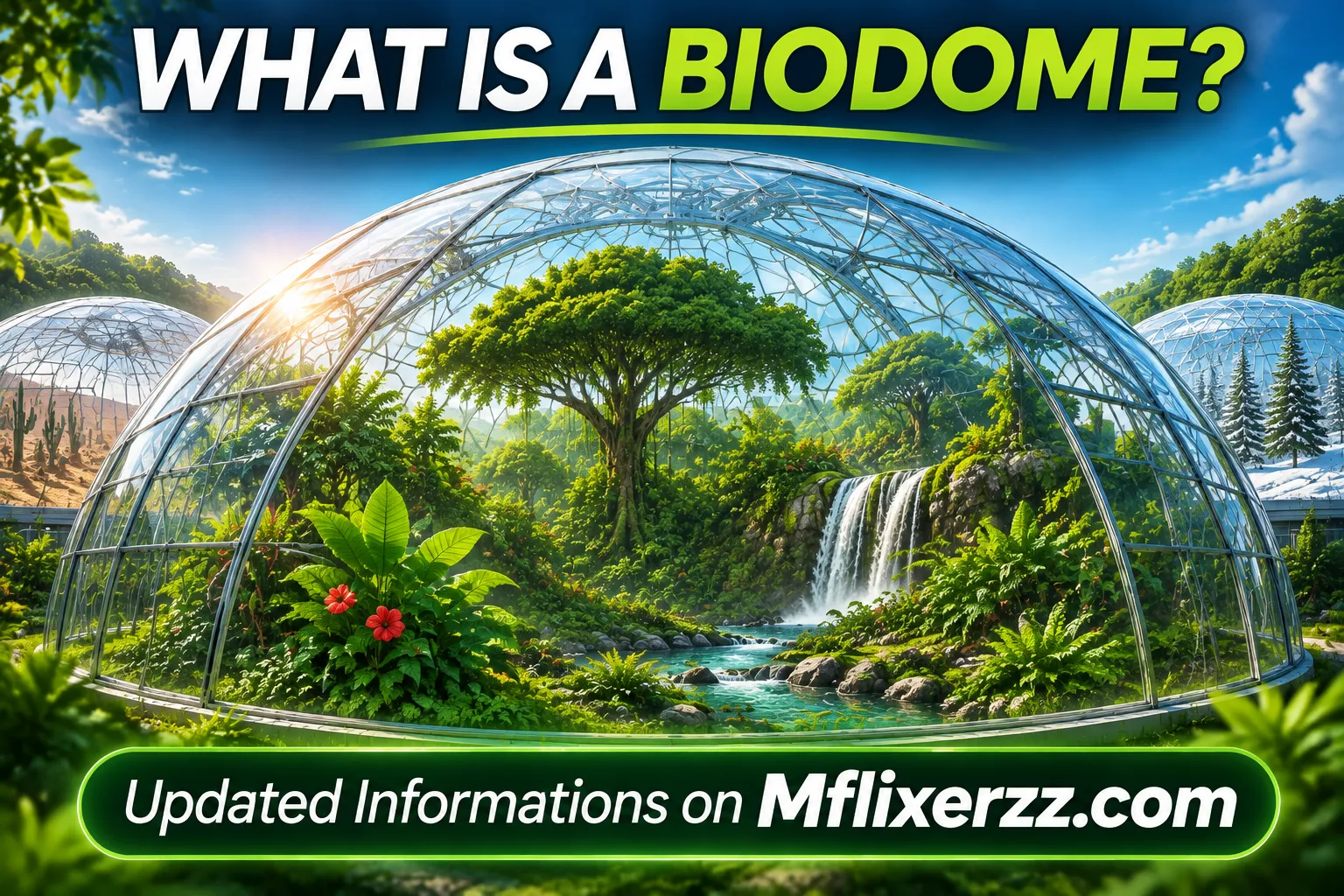
What Is a Biodome? How Artificial Ecosystems Work, Their Benefits, Types, and Famous Examples in 2026
A biodome is a specially designed enclosed environment that recreates or maintains conditions found in a natural ecosystem. It can contain plants, animals, water, soil and other living organisms, allowing people to observe how different parts of nature interact. Depending on its purpose, a biodome may represent a tropical rainforest, desert, wetland, ocean environment or another ecological setting.
Biodomes are more than attractive glass structures filled with greenery. They can serve as scientific laboratories, conservation facilities, educational attractions and experimental environments for sustainable agriculture. Researchers also use controlled habitats to investigate how plants and other biological systems might support human life during long-duration space missions.
In 2026, facilities such as Biosphere 2 continue to demonstrate the importance of this work. New research involving rainforest ecosystems, controlled agriculture and space-habitat experiments shows how biodomes can contribute to environmental science and future technology.
Quick Review Details
| Feature | Details |
| Name | Biodome |
| Main purpose | Recreating and studying ecosystems |
| Structure | Enclosed or partially enclosed environment |
| Common materials | Glass, steel and transparent polymers |
| Living components | Plants, animals and microorganisms |
| Environmental controls | Temperature, humidity, lighting and ventilation |
| Main types | Tropical, desert, aquatic and temperate |
| Scientific applications | Ecology, climate and conservation research |
| Agricultural applications | Hydroponics and controlled growing |
| Space applications | Closed-loop life-support experiments |
| Famous example | Biosphere 2, Arizona |
| Other examples | Eden Project and Montréal Biodôme |
| Main benefits | Education, research and environmental awareness |
| Main limitations | Operating costs, energy use and ecological complexity |
| Future potential | Climate resilience and space exploration |
What Is a Biodome?
A biodome is a constructed environment designed to maintain or study the conditions needed by particular living organisms. Its boundaries help researchers and facility managers regulate environmental factors that would otherwise change naturally. These factors can include temperature, humidity, air movement, water availability and exposure to sunlight.
The word is commonly used for large ecological attractions and research facilities, although it is not a single standardized scientific category with one required design. Some biodomes are enormous glass structures containing several habitats, while others are smaller controlled greenhouses or experimental environments.
The central idea is to bring important parts of an ecosystem into a managed space. By doing so, scientists can observe biological relationships, study environmental changes and investigate how living systems respond to different conditions.
How Does a Biodome Work?
A biodome works by creating an environment suitable for the organisms living inside it. The structure provides physical protection, while environmental equipment helps maintain conditions such as temperature, humidity, ventilation and water supply.
Transparent roofing and walls allow natural light to enter, supporting photosynthesis in plants. In some facilities, artificial lighting supplements sunlight when natural conditions are insufficient. Heating, cooling and ventilation systems help maintain appropriate temperatures and prevent excessive humidity or poor air circulation.
Water management is another important part of the design. Depending on the facility, water may be supplied through irrigation, collected from rainfall, circulated through aquatic systems or reused after treatment. Sensors can monitor environmental conditions and alert operators when adjustments are needed.
Not every biodome operates as a completely closed ecosystem. Many facilities exchange air and water with the outside environment and depend on regular maintenance. A genuinely closed ecological system requires much more complex management because waste, nutrients, oxygen, carbon dioxide and water must be balanced over time.
Main Components of a Biodome
A functioning biodome depends on several interconnected components. Each contributes to maintaining the environment and supporting the organisms living within it.
The outer structure provides protection and helps create a stable indoor environment. Depending on the design, it may use glass, steel frameworks, transparent plastic panels or specialized lightweight materials.
The lighting system supplies energy for plant growth. Natural sunlight is often the primary source, although artificial lighting may be necessary in controlled growing facilities.
The climate-control system regulates temperature, humidity and ventilation. Its importance depends on the habitat being recreated because tropical plants, desert vegetation and aquatic organisms have very different environmental requirements.
The water and nutrient systems support plant growth and aquatic life. Irrigation, filtration, nutrient delivery and water circulation may all be part of the facility.
The biological components include plants, animals and microorganisms. Their interactions help create the living relationships that researchers and visitors want to observe.
Monitoring equipment measures conditions such as temperature, carbon dioxide, oxygen, humidity and water quality. Advanced research biodomes can use continuous sensors to collect detailed environmental data.
Different Types of Biodomes
Biodomes can be designed around different natural environments. Their internal conditions depend on the plants, animals and ecological processes that researchers or facility managers want to maintain.
Tropical rainforest biodomes recreate warm, humid environments with dense vegetation, climbing plants, trees and sometimes waterfalls. They can help researchers investigate plant growth, biodiversity and the effects of changing temperatures or rainfall.
Desert biodomes reproduce dry environments where water is limited and temperatures may vary considerably. Their vegetation may include cacti, succulents and other drought-adapted plants. These facilities can demonstrate how organisms survive under challenging environmental conditions.
Aquatic biodomes focus on freshwater or marine environments. They may include fish, aquatic plants, coral, invertebrates and carefully maintained water systems. Monitoring water temperature, oxygen levels, salinity and filtration is essential.
Temperate forest biodomes recreate woodland conditions with trees, shrubs and seasonal vegetation. They can help demonstrate relationships between plants, animals, soil and changing weather conditions.
Closed ecological biodomes are designed to investigate how living systems can function with limited external resources. They may include crops, microorganisms, air-recycling equipment and water-treatment systems. Such facilities are particularly relevant to research into isolated habitats and space exploration.
These categories describe common purposes rather than an official scientific classification. Some facilities combine several environments under one roof.
Famous Biodome Examples
Several well-known facilities demonstrate how biodomes can be used for research, education and public engagement. Their designs vary considerably, but each provides an opportunity to explore natural environments in a controlled or specially managed setting.
Biosphere 2
Located in Oracle, Arizona, Biosphere 2 is one of the best-known examples of a large controlled ecological environment. Operated by the University of Arizona, it covers approximately 3.14 acres and contains more than 300 species across five stabilized ecosystems.
The five environments are an ocean, mangrove wetlands, tropical rainforest, savanna grasslands and fog desert. This arrangement allows scientists to investigate how interconnected ecosystems respond to environmental changes and human influence.
Biosphere 2 was originally built to explore whether humans could survive in a sealed environment. Today, it serves as an important research facility for ecology, climate science, agriculture and human space exploration.
In January 2026, the University of Arizona described its continuing work on rainforest resilience, coral restoration and controlled ecological research. Scientists have also studied how high temperatures affect photosynthesis and leaf function.
The Eden Project
The Eden Project in Cornwall, England, is another famous example of large-scale biodome architecture. It opened in March 2001 on the site of a former clay mine and was designed to reconnect visitors with plants, nature and environmental education.
Its two principal indoor environments are the Rainforest Biome and the Mediterranean Biome. According to the project’s architectural information, the rainforest structure covers approximately 16,000 square metres and reaches 50 metres in height. The Mediterranean Biome covers approximately 6,540 square metres and reaches 30 metres.
One of its most interesting features is the use of ETFE, a lightweight transparent material. The structures use inflated three-layer ETFE panels rather than conventional glass across their large roof areas. This design helps create spacious indoor environments while reducing structural weight.
In 2026, the Eden Project celebrated its 25th anniversary. Its official figures reported more than 25 million visitors since opening and an estimated economic contribution exceeding £6.8 billion to Cornwall and the wider South West region.
Montréal Biodôme
The Montréal Biodôme in Quebec, Canada, offers visitors an opportunity to explore different ecosystems of the Americas within one facility. It forms part of Espace pour la vie, a group of natural science institutions in Montréal.
The Biodôme combines living collections and educational experiences to demonstrate how different habitats support distinctive plants and animals. Visitors can explore environments inspired by tropical forests, aquatic habitats and other ecological regions.
A current 2026 attraction is the exhibition A Close-knit Nature, which explores keystone species and their role in maintaining ecological balance. It includes naturalized specimens, historical scientific collections and the immersive Mégaceta experience, which uses life-size digital projections to introduce visitors to humpback whale behaviour.
The exhibition is scheduled to run from November 1, 2025, through December 31, 2026.
Latest Biodome Research in 2026
Biodomes are becoming increasingly important in scientific research because they allow researchers to study environmental conditions in a controlled setting. Recent developments at Biosphere 2 demonstrate how this approach can contribute to several areas of science.
In February 2026, the University of Arizona published an update about its Space Analog for the Moon and Mars, known as SAM. The facility is designed to simulate aspects of living in a sealed habitat away from Earth’s natural atmosphere and food systems.
During a two-week experiment in October 2025, one crew member lived inside the habitat with 144 dwarf pea plants. Researchers examined how efficiently the plants could absorb carbon dioxide and release oxygen through photosynthesis.
The experiment was important because future space missions may need biological systems that help maintain breathable air while also producing food. The SAM facility can accommodate missions involving up to four crew members and contains environmental monitoring and life-support equipment.
Another development took place at Biosphere 2’s rainforest. In October 2026, the University of Arizona announced the completion of three new canopy walkways. These structures provide researchers with access to the upper rainforest canopy, which rises more than 70 feet above the ground in some areas.
Some trees inside the rainforest reach over 90 feet. The new walkways make it easier to study how different canopy levels respond to drought, higher temperatures and other environmental stresses.
These developments show that biodomes are not simply visitor attractions. They can provide research environments for investigating questions that are difficult to study under uncontrolled outdoor conditions.
Benefits of Biodomes
Biodomes offer several advantages for scientific research, education and environmental awareness. Their value comes from the ability to observe living systems in an environment where important conditions can be monitored.
Environmental education: Biodomes allow visitors and students to experience different natural habitats without travelling to distant regions. They can make lessons about biodiversity, climate and ecological relationships easier to understand.
Scientific research: Researchers can monitor environmental conditions and study how plants, animals and microorganisms respond to specific changes. This can help improve understanding of ecological processes.
Conservation research: Controlled habitats can support research into species requirements, breeding conditions and environmental pressures. They may also help researchers develop strategies for protecting vulnerable species.
Agricultural development: Controlled environments can be used to test hydroponics, irrigation methods, crop varieties and nutrient-management systems. These techniques may contribute to more efficient food production.
Climate research: Biodomes can help scientists examine the effects of heat, drought, humidity and other environmental conditions on plants and ecosystems.
Space exploration: Closed ecological research can contribute to the development of life-support systems for astronauts. Plants may eventually support food production and parts of air-recycling systems during long-duration missions.
Challenges and Limitations
Despite their advantages, biodomes require careful planning, technical knowledge and continuous maintenance. Creating an artificial environment that supports living organisms is more complicated than simply placing plants and animals inside a glass building.
High construction costs are one major challenge. Large structures require specialized materials, engineering, foundations, climate systems and safety measures. Their size and complexity can make construction expensive.
Energy consumption is another concern. Heating, cooling, ventilation, artificial lighting and water treatment can require substantial electricity, particularly when maintaining tropical conditions in colder climates.
Ecological complexity also creates limitations. Natural ecosystems contain countless relationships among species, soil, microorganisms, water and climate. Recreating a small portion of a rainforest or ocean cannot reproduce every process found in the original environment.
Technical failures can have serious consequences. A problem with temperature regulation, water filtration or ventilation may affect sensitive organisms. Research facilities therefore need monitoring equipment, maintenance plans and backup systems.
Finally, biodomes cannot replace natural ecosystems. They can support conservation research and environmental education, but protecting forests, wetlands, oceans and other habitats in the wild remains essential.
Biodome vs. Biome vs. Biosphere
These three terms are related to ecology, but they have different meanings.
A biodome is a constructed environment designed to maintain or study particular ecological conditions. It may contain one habitat or several connected environments.
A biome is a large natural ecological region characterized by its climate, vegetation and typical animal communities. Tropical rainforests, deserts, grasslands and tundra are examples.
A biosphere refers to the global zone of Earth where life exists. It includes all living organisms and the ecosystems in which they interact.
An easy way to remember the difference is that a biome is a natural ecological region, a biodome is a constructed environment, and the biosphere encompasses Earth’s living systems as a whole.
Biodomes and Space Exploration
One of the most interesting future applications of biodome research is human space exploration. Astronauts travelling to the Moon or Mars cannot depend on regular supplies from Earth in the same way that people living on our planet can.
Long-duration missions require reliable systems for oxygen production, carbon dioxide removal, temperature regulation, food supplies and water recovery. NASA’s Environmental Control and Life Support Systems programme investigates technologies that address these requirements.
Biological systems may eventually complement mechanical equipment. Plants can absorb carbon dioxide during photosynthesis and release oxygen while producing edible biomass. However, a functioning habitat would need to balance plant growth, human consumption, nutrients, lighting and waste processing.
The SAM experiments at Biosphere 2 are relevant because they allow researchers to study plants and human occupants together inside a pressurized habitat. The results can help scientists understand the requirements of future isolated living environments.
NASA also investigates mechanical systems for recovering water, removing contaminants and maintaining breathable air. Combining biological and engineering approaches may offer additional possibilities for future lunar and Martian habitats.
The Future of Biodomes
The future of biodomes is closely connected to environmental science, sustainable agriculture and space technology. Better sensors, automation and environmental monitoring systems may make it easier to manage complex habitats and collect more accurate research data.
Artificial intelligence and digital modelling could also improve how researchers understand interactions between plants, animals, climate and environmental conditions. Virtual models may allow scientists to test possible changes before carrying out physical experiments.
Another important direction is climate resilience. Researchers can use controlled environments to investigate how plants respond to drought, heat and changing atmospheric conditions. Such findings may contribute to strategies for protecting forests, improving agricultural systems and managing natural resources.
Biodomes will not solve every environmental problem, but they can help researchers develop practical knowledge about how living systems function. Their greatest contribution may come from combining scientific discovery with public education and responsible environmental management.
Final Thoughts
A biodome is much more than an enclosed greenhouse. It is a carefully designed environment that allows people to recreate, observe and study ecological conditions. Depending on its purpose, it may support environmental education, scientific research, agricultural experiments, conservation projects or investigations into future space habitats.
Facilities such as Biosphere 2, the Eden Project and Montréal Biodôme demonstrate the different ways biodomes can be developed and used. Recent research at Biosphere 2 in 2026 further highlights their importance in studying rainforest resilience and developing life-support systems for future space missions.
Although biodomes have limitations involving cost, energy use and ecological complexity, they remain valuable tools for understanding nature. By bringing scientific research and environmental learning together, they can help people appreciate the importance of protecting the ecosystems that sustain life on Earth.
Frequently Asked Questions
What is a biodome in simple words?
A biodome is an enclosed environment designed to recreate or maintain a natural habitat. It can contain plants, animals, water and other living organisms under managed environmental conditions.
What is the main purpose of a biodome?
Its main purpose is to support environmental research, education and the study of ecosystems. Some biodomes also investigate agriculture, conservation and life-support technologies for space exploration.
What are the five main types of biodomes?
Common functional types include tropical rainforest, desert, aquatic, temperate forest and closed ecological biodomes. These categories describe different environments and research purposes rather than a formal universal classification.
What is the most famous biodome?
Biosphere 2 in Arizona is one of the most famous examples. It covers approximately 3.14 acres and contains five stabilized ecosystems with more than 300 species.
Can humans live inside a biodome?
Humans can live inside specially designed controlled habitats for research purposes. However, maintaining breathable air, food, clean water, waste management and stable environmental conditions requires complex systems. A biodome is not automatically self-sustaining.
Explore Our Updated Posts On: Es Mi2Manga Review: Manga and Manhwa Collection, Website Traffic, App Features, and Alternatives