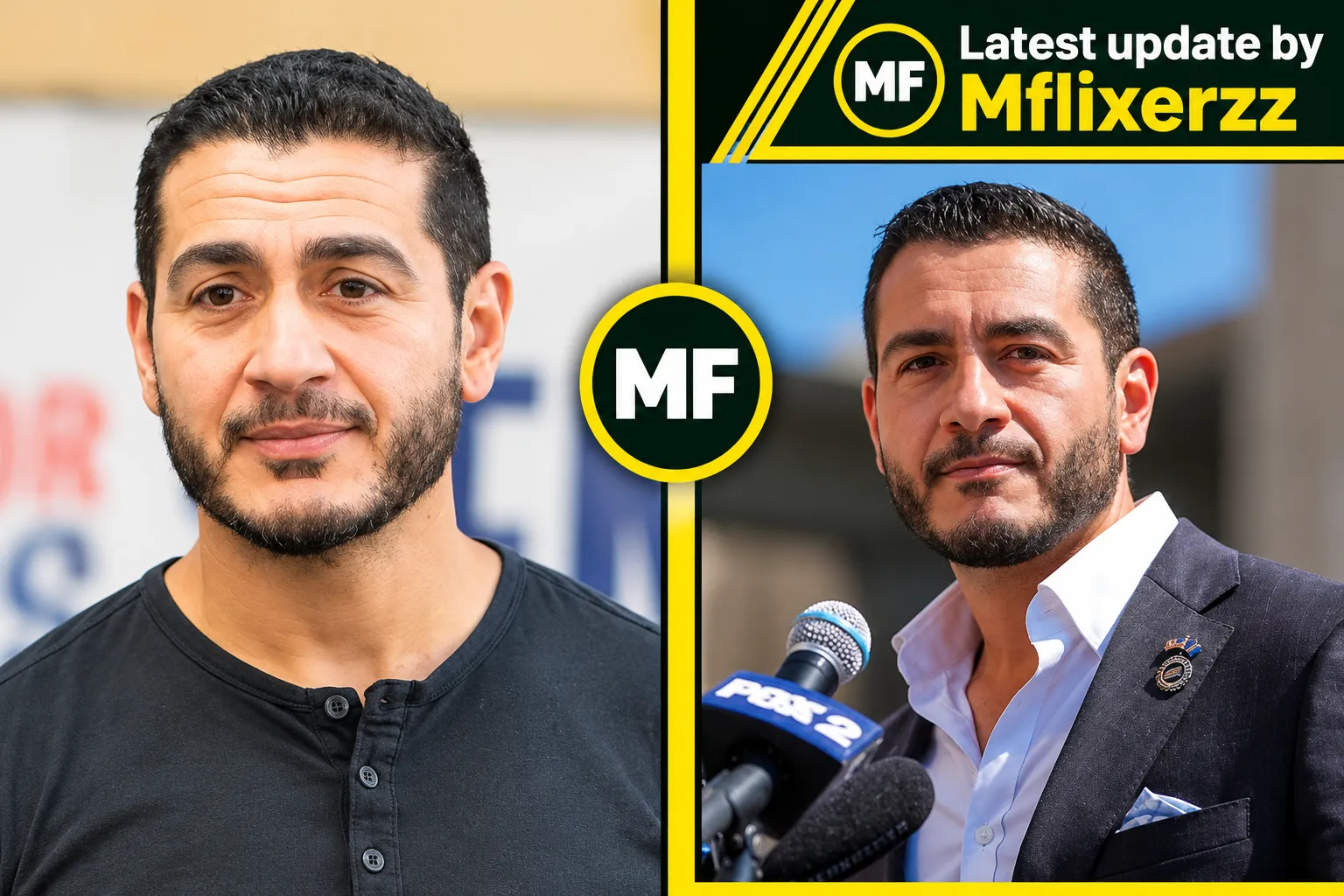
Abdul El-Sayed Biography: Age, Height, Family, Education, Career, Net Worth and Political Life (2026)
Abdul El-Sayed is an American public health expert, author and Democratic politician who has become one of the most closely watched progressive figures in Michigan politics. He first gained national attention during his 2018 campaign for governor of Michigan and later returned to electoral politics with a campaign for the United States Senate.
In August 2026, El-Sayed won the Democratic nomination for Michigan’s open Senate seat, defeating Representative Haley Stevens in a closely contested primary. He is now challenging Republican candidate Mike Rogers in the November 3 general election. His campaign focuses on affordable healthcare, economic security, campaign finance reform and changes to American foreign policy.
Beyond politics, El-Sayed has built a career in public health administration, epidemiology, academic research and writing. His experience leading Detroit’s health department and Wayne County’s public health agency has shaped his approach to healthcare and government policy.
Abdul El-Sayed Quick Bio
| Detail | Information |
| Full Name | Abdulrahman Mohamed El-Sayed |
| Date of Birth | October 31, 1984 |
| Age | 41 years old |
| Birthplace | Rochester Hills, Michigan, USA |
| Nationality | American |
| Profession | Public health expert, author and politician |
| Political Party | Democratic Party |
| Religion | Islam |
| Education | University of Michigan, University of Oxford and Columbia University |
| Wife | Sarah Jukaku |
| Children | Two daughters, Emmalee and Serene |
| Famous For | Public health leadership and progressive politics |
| Current Political Role | Democratic nominee for U.S. Senate in Michigan |
| Height | Not reliably verified |
| Net Worth | No independently verified estimate |
| Official Website | abdulforsenate.com |
Early Life and Background
Abdul El-Sayed was born on October 31, 1984, in Rochester Hills, Michigan, a community near Detroit. His full name is Abdulrahman Mohamed El-Sayed. He grew up in southeastern Michigan, where his family, education and local experiences helped shape his interest in public service.
His father, Mohamed, immigrated from Egypt to the United States to study at Wayne State University. El-Sayed was raised by his father and stepmother, Jacqueline, whose family has longstanding roots in Michigan. His biological mother, Fatten Elkomy, has worked as a psychiatric nurse practitioner.
Growing up in a family connected to engineering, healthcare and education exposed him to different professional perspectives. He later developed an interest in how public institutions affect everyday life, particularly in areas such as healthcare access, environmental conditions and economic inequality.
Education and Academic Achievements
El-Sayed graduated from Bloomfield Hills High School in 2003. During his school years, he was active in athletics and captained the football, wrestling and lacrosse teams. His participation in sports helped develop leadership and teamwork skills that later became part of his public profile.
He attended the University of Michigan, where he studied biology and political science. He graduated in 2007 with highest distinction and participated in the university’s men’s lacrosse programme.
He subsequently pursued medical and public health training. As a Rhodes Scholar, he studied at the University of Oxford, completing a doctorate in public health in 2011. He later earned his medical degree from Columbia University’s College of Physicians and Surgeons in 2014.
His academic background combines medicine, epidemiology and public policy. These disciplines helped him examine how factors such as housing, income, pollution and access to medical services influence population health.
Public Health Career
El-Sayed began building his professional reputation through research and academic work. Before entering government administration, he worked as an assistant professor of epidemiology at Columbia University’s Mailman School of Public Health.
His research examined the relationships between public policy, social conditions and health outcomes. He also contributed to scientific publications and worked on approaches to improving health systems through research and data analysis.
This background gave him experience in both the scientific and practical sides of public health. Rather than concentrating exclusively on treating individual patients, his work focused on identifying broader conditions that can affect the health of entire communities.
His professional experience later became a central part of his political message. He has argued that effective government should address the underlying causes of illness, including unsafe environments, unaffordable healthcare and unequal access to essential services.
Detroit Health Department Leadership
In 2015, El-Sayed became executive director of public health and health officer for the City of Detroit. He was appointed following a period in which the city’s health department had been privatized during Detroit’s bankruptcy.
His responsibility was to rebuild the department and strengthen its ability to serve residents. His work involved improving public health programmes, coordinating services and addressing problems affecting vulnerable communities.
During his time in Detroit, his initiatives included work on lead exposure, sexually transmitted infections, HIV prevention and access to preventive health services. His supporters have highlighted these programmes as examples of how local government can make healthcare resources more accessible.
The position also gave him direct experience with the practical limitations of public administration. Health policies must be supported by funding, staff, public cooperation and effective coordination to produce meaningful results.
Wayne County Public Health Leadership
After his work in Detroit, El-Sayed became director of Wayne County’s Department of Health, Human and Veterans Services and served as the county’s health officer. The department serves approximately 1.8 million residents.
In this role, he worked on public health services, environmental health, healthcare access and programmes designed to support residents facing financial or medical difficulties.
His campaign biography highlights efforts involving lead removal from Detroit elementary schools, access to naloxone, free glasses for children and a medical-debt relief programme. His campaign says the initiative could cancel up to $700 million in medical debt for approximately 300,000 Michigan residents over two years.
These programmes are central to his argument that public health is closely connected to economic security. Medical debt, environmental hazards and inadequate access to preventive care can affect families long before they require emergency treatment.
2018 Michigan Governor Campaign
El-Sayed first ran for statewide office in 2018, when he sought the Democratic nomination for governor of Michigan. His campaign presented a progressive platform that included universal healthcare, environmental protection and reforms to the state’s political system.
He received support from prominent progressive figures, including Senator Bernie Sanders and Representative Alexandria Ocasio-Cortez. Despite attracting national attention, he lost the primary to Gretchen Whitmer.
The campaign nevertheless introduced him to a broader political audience. It also gave him experience in organising volunteers, communicating policy proposals and building a statewide political movement.
After the election, he continued working in public health, academia, writing and media. These activities allowed him to maintain a public profile while developing his ideas about healthcare and American politics.
Books and Podcast
Writing and public communication have played an important role in El-Sayed’s career. His books include Healing Politics: A Doctor’s Journey into the Heart of Our Political Epidemic and Medicare for All: A Citizen’s Guide, co-authored with Micah Johnson.
In Healing Politics, he examines how political and economic conditions contribute to insecurity and argues for a more empathetic approach to public life. Medicare for All: A Citizen’s Guide explains the arguments and policy considerations behind a universal healthcare system.
El-Sayed has also hosted the podcast America Dissected, which explores the connections between politics, public policy and health. His work in writing and broadcasting has helped him explain complex issues to audiences outside academic and government settings.
2026 Senate Campaign
El-Sayed entered the 2026 Democratic Senate primary as a progressive candidate seeking to replace retiring Democratic Senator Gary Peters. His opponents included Representative Haley Stevens and state Senator Mallory McMorrow, who suspended her campaign before the primary.
The contest attracted national attention because of its implications for the Democratic Party and the balance of power in the Senate. El-Sayed built a grassroots campaign focused on healthcare, household costs and reducing the influence of wealthy donors in politics.
On August 5, 2026, the Associated Press projected that he had won the Democratic primary against Stevens. The result was particularly significant because he had faced substantial outside spending against his campaign.
His victory positioned him to represent the Democratic Party in the November general election. It also made him a prominent example of a progressive candidate winning a competitive primary in a politically divided state.
Political Views and Key Policies
Healthcare is one of El-Sayed’s main priorities. He supports Medicare for All, a proposed system intended to provide universal health coverage through a public financing structure. He argues that healthcare should be treated as an essential service rather than a privilege determined by employment or income.
He also advocates policies intended to reduce household expenses, including the costs associated with medical treatment, housing and essential goods. His broader economic message is that government should make everyday life more affordable for working families.
Campaign finance reform is another central theme. El-Sayed has criticised the influence of large donors and outside spending in elections, arguing that elected officials should be accountable to voters rather than wealthy interests.
On foreign policy, he has called for ending U.S. military aid to Israel and strongly criticised Israel’s conduct in Gaza. These positions have become major issues in his campaign and have attracted both support and opposition.
Family, Wife and Children
El-Sayed is married to Sarah Jukaku, a psychiatrist. The couple met while attending the University of Michigan and later built their family in Michigan.
They have two daughters, Emmalee and Serene. El-Sayed has spoken about his family in the context of his commitment to improving healthcare, economic security and the future available to younger generations.
Although he discusses family life in public appearances, much of his family’s private life remains outside his political work. Information about their family should therefore be limited to details confirmed by reliable public sources.
Religion and Cultural Background
El-Sayed is a Muslim American whose parents have Egyptian and American family backgrounds. He has discussed the role of faith in shaping his personal values, particularly his emphasis on dignity, service and treating people fairly.
His religious identity has also become a significant topic during the 2026 Senate campaign. If elected, he would become the first Muslim to serve in the United States Senate.
Coverage of his campaign has included both discussions of Muslim representation in American politics and controversy surrounding attacks on his identity and foreign-policy positions. El-Sayed has rejected allegations linking him to extremist organisations, describing such claims as politically motivated.
His campaign has argued that voters should judge candidates on their records, policy proposals and public service rather than their religious background.
Age, Height and Physical Appearance
Born on October 31, 1984, El-Sayed is 41 years old as of October 28, 2026. He will turn 42 on October 31.
His public profile is primarily centred on his academic background, healthcare experience and political work. A reliable, authoritative source confirming his exact height was not identified, so a specific measurement should not be published as fact.
Net Worth and Financial Information
Abdul El-Sayed’s exact personal net worth has not been independently established through a reliable public valuation. Online estimates of politicians’ wealth can be misleading when they do not account for the valuation ranges used in financial disclosures, debts, assets and other obligations.
His campaign finances are a separate matter from his personal wealth. According to the Federal Election Commission, campaign committees associated with his 2026 Senate bid reported approximately $53.8 million in total receipts for the reporting period from January 1, 2025, through October 14, 2026. These are campaign funds, not his personal income or net worth.
Readers should distinguish between campaign fundraising and an individual’s personal assets. Without a reliable financial assessment, his personal net worth is best described as unverified.
Social Media and Official Website
El-Sayed uses online platforms to share campaign updates, discuss healthcare policy and communicate directly with supporters. His official campaign website provides information about his background, political priorities, events and volunteer opportunities.
Readers can visit Abdul El-Sayed’s official Senate campaign website for his biography and current policy positions. For financial information about his campaign, the Federal Election Commission’s candidate profile provides official fundraising and reporting details.
Latest News in October 2026
As of October 28, El-Sayed is campaigning against Republican Mike Rogers ahead of Michigan’s November 3 Senate election. The contest is considered important to the national balance of power in the Senate.
A WDIV/Detroit News poll published on October 27 found El-Sayed leading Rogers by 51.4% to 45.1%. The poll surveyed 600 likely voters between October 19 and October 22 and reported a margin of error of plus or minus four percentage points. Poll results are a snapshot of voter preferences, not a prediction or final election result.
The campaign has also faced contentious debate over healthcare, foreign policy, campaign spending and attacks related to El-Sayed’s Muslim identity. The outcome of the general election remains unknown as of the date of this article.
Frequently Asked Questions
How old is Abdul El-Sayed in 2026?
Abdul El-Sayed was born on October 31, 1984. He is 41 years old as of October 28, 2026.
Who is Abdul El-Sayed’s wife?
His wife is Sarah Jukaku, a psychiatrist. They met while attending the University of Michigan and have two daughters.
What is Abdul El-Sayed known for?
He is known for his public health leadership in Detroit and Wayne County, his writing on healthcare policy and his progressive political campaigns.
What is Abdul El-Sayed’s net worth?
His personal net worth has not been reliably verified. Federal Election Commission records provide information about his campaign fundraising, but campaign receipts should not be confused with personal wealth.
Is Abdul El-Sayed running for the U.S. Senate in 2026?
Yes. He won the Democratic primary in August 2026 and is challenging Republican Mike Rogers in the November 3 general election.
Last Wordings
Abdul El-Sayed’s career combines public health, academic research, writing and progressive politics. His work in Detroit and Wayne County gave him experience dealing with the practical challenges of healthcare administration, while his academic background helped him understand how public policy affects population health.
His 2018 gubernatorial campaign introduced him to statewide politics, and his victory in the 2026 Democratic Senate primary established him as a significant figure in Michigan’s political landscape. His campaign continues to focus on healthcare affordability, economic security and reducing the influence of money in politics.
As Michigan approaches its November 2026 Senate election, El-Sayed’s combination of public health experience and progressive policy proposals remains central to his appeal. His political future will depend on the voters’ decision in the general election.
Continue Exploring Our Latest Article: Michael Ziegler Music Biography: Age, Family, Albums and Career Highlights