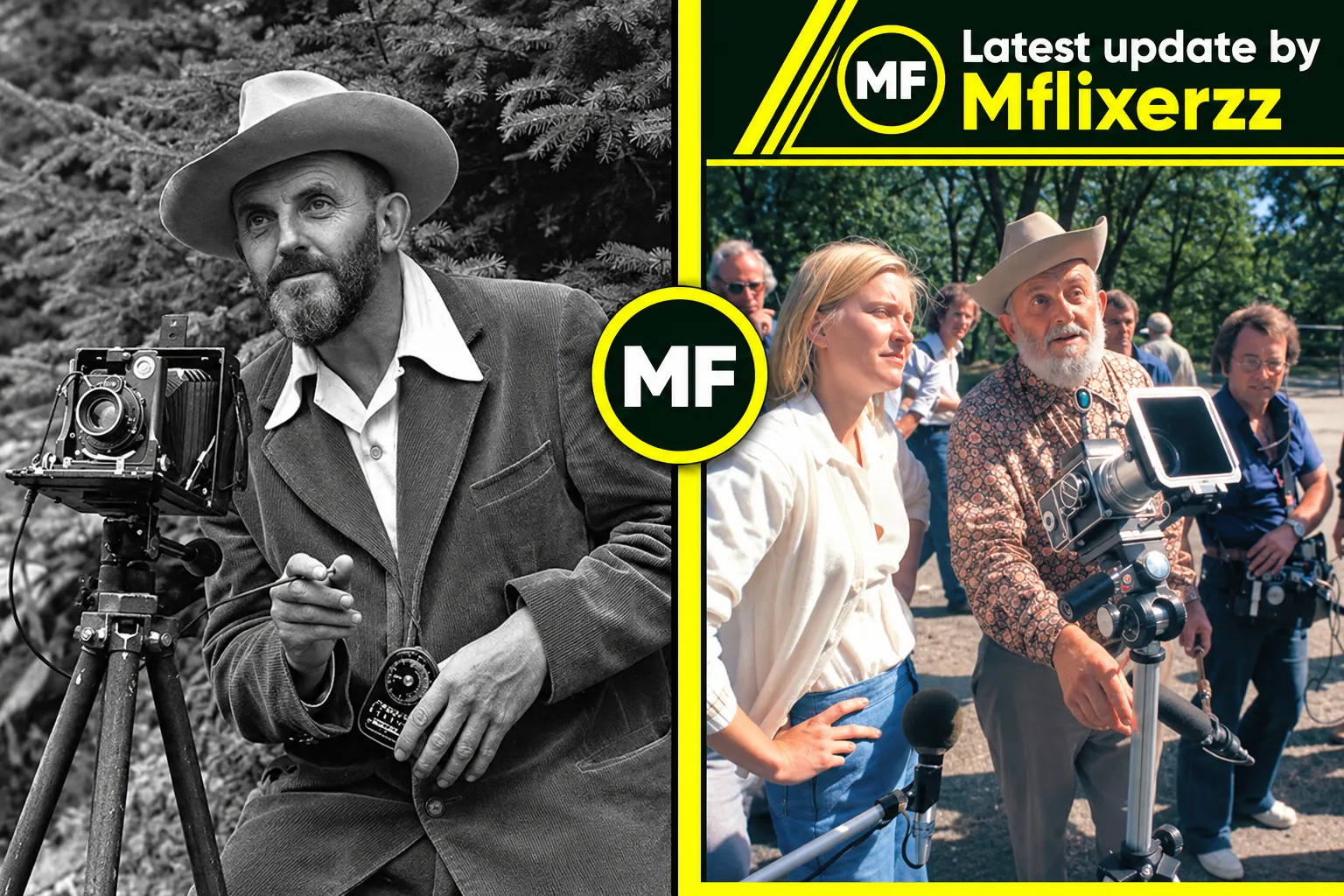
Ansel Adams Biography: Age, Wife, Children, Career, Famous Photographs and Legacy
Ansel Adams was an American photographer, environmental conservationist and author whose black-and-white landscape photographs transformed the way people viewed the natural world. Best known for his images of Yosemite National Park, the Sierra Nevada mountains and the American West, he combined artistic vision with remarkable technical precision. His photographs remain influential in museums, photography schools and conservation movements around the world.
Born on February 20, 1902, in San Francisco, California, Adams developed a lifelong connection with nature during a family visit to Yosemite in 1916. What began as an interest in photography gradually became a distinguished career spanning more than six decades. His work demonstrated that photographs could communicate the beauty, scale and emotional power of wilderness with extraordinary clarity.
Adams was also an important advocate for protecting national parks and wild landscapes. He worked with conservation organizations, published books, taught photography and helped establish institutions dedicated to photographic art. He died on April 22, 1984, at the age of 82, but his photographs and ideas continue to shape modern photography. The U.S. National Park Service and the Smithsonian American Art Museum recognize him as a major figure in American photographic history.
Ansel Adams Quick Bio
| Quick bio detail | Information |
| Full name | Ansel Easton Adams |
| Date of birth | February 20, 1902 |
| Date of death | April 22, 1984 |
| Age at death | 82 years |
| Birthplace | San Francisco, California, USA |
| Nationality | American |
| Profession | Photographer, author, educator and conservationist |
| Father | Charles Hitchcock Adams |
| Mother | Olive Bray Adams |
| Wife | Virginia Best Adams |
| Marriage year | 1928 |
| Children | Michael Adams and Anne Adams |
| Height | Not reliably documented |
| Net worth | No verified figure available |
| Famous photograph | Moonrise, Hernandez, New Mexico |
| Photography group | Group f/64 |
| Major award | Presidential Medal of Freedom, 1980 |
| Known for | Black-and-white landscape photography |
Early Life
Ansel Easton Adams was born into a family living in San Francisco. His father, Charles Hitchcock Adams, worked in business, while his mother was Olive Bray Adams. Ansel was their only child. His early childhood was affected by the family’s changing financial circumstances following the financial panic of 1907.
When Adams was four years old, an aftershock associated with the 1906 San Francisco earthquake caused him to fall and break his nose. The injury left a lasting physical mark. As he grew older, he developed an independent personality and often found conventional schooling difficult.
He eventually received much of his education at home under his father’s supervision. Although he did not complete a traditional high school education, he continued learning independently and developed interests that would shape his future.
Childhood Interests
Photography was not Adams’s only early passion. He became deeply interested in music, particularly the piano, and spent years studying the instrument. During his teenage years, he seriously considered becoming a concert pianist.
Music taught him discipline, patience and attention to detail. These qualities later became important in his photographic work, especially when he began studying exposure, composition and darkroom printing.
His childhood also included long walks, outdoor exploration and a growing appreciation for natural landscapes. These experiences helped establish the combination of artistic sensitivity and technical concentration that became characteristic of his photography.
First Visit to Yosemite
Adams visited Yosemite National Park for the first time in 1916, when he was 14 years old. His father gave him a Kodak Brownie camera, which he used to photograph the spectacular scenery.
The visit changed the direction of his life. Yosemite’s granite cliffs, waterfalls, forests and changing light made a lasting impression on him. He returned repeatedly, gradually learning how to observe landscapes and translate what he saw into photographs.
According to the Center for Creative Photography at the University of Arizona, Adams’s connection with the Sierra Nevada mountains developed alongside his interest in photography. The park became both a source of artistic inspiration and a place he would spend much of his life trying to protect.
Education and Early Photography
Adams did not follow a conventional university education. Instead, he learned through private instruction, independent study, photography practice and contact with other artists.
In 1917, he obtained summer work at a photo-finishing business in San Francisco. This experience introduced him to the practical side of photographic processing and helped him understand how images were developed and printed.
He also began contributing photographs and writing to publications associated with the Sierra Club. These early opportunities helped him build confidence and develop a professional direction.
Although he continued to value music, Adams eventually recognized that photography offered the creative and professional future he wanted. By around 1929–1930, he had committed himself to photography as his principal career.
Photography Career
Adams’s professional career developed gradually. His early work reflected the softer, painterly style known as Pictorialism, which was popular among photographers during the early twentieth century.
His artistic approach changed after he encountered the work of photographer Paul Strand in 1930. Strand’s sharply focused images encouraged Adams to pursue a more direct photographic style, emphasizing clarity, detail and the unique qualities of the camera.
In 1932, Adams helped establish Group f/64, alongside photographers including Edward Weston, Imogen Cunningham and Willard Van Dyke. The group promoted sharp focus and precise photographic technique rather than trying to imitate paintings.
This approach helped establish photography as an independent art form. Adams became known for carefully controlled compositions, dramatic contrasts and the ability to reveal intricate details in natural landscapes.
Group f/64
Group f/64 was an important movement in modern American photography. Its name referred to a very small camera aperture associated with extensive depth of field and sharp detail under suitable photographic conditions.
The group believed that photography should embrace the qualities of its own medium rather than imitate painting. Its members emphasized clear composition, carefully observed subjects and technical precision.
Adams’s involvement with the group strengthened his artistic reputation and placed him among the leading photographers of his generation. The movement also influenced later photographers who valued realistic detail and deliberate control over the photographic process.
His work became an important example of how technical mastery could support artistic expression rather than limit it.
Famous Photographs
Adams created many celebrated photographs during his career. His images of Yosemite and other wilderness areas remain among the most recognizable examples of American landscape photography.
Moonrise, Hernandez, New Mexico, photographed in 1941, is among his most famous works. The image combines a darkening sky, distant mountains, illuminated buildings and cemetery crosses to create a striking contrast between light and shadow.
The Tetons and the Snake River, made in 1942, presents a winding river against the dramatic mountain landscape of Wyoming. Its composition demonstrates Adams’s ability to balance foreground detail with the scale of a vast natural environment.
Another important image is Clearing Winter Storm, which captures Yosemite Valley as changing weather reveals the landscape. The photograph demonstrates his sensitivity to atmospheric conditions and his ability to use tonal contrast to convey depth.
These photographs became widely admired because they combine technical precision with a strong emotional response to nature.
The Zone System
One of Adams’s most important contributions to photography was his work on the Zone System, developed with photographer and educator Fred Archer.
The system provides a method for understanding the relationship between light, exposure, negative development and the final print. It helps photographers anticipate how different brightness levels in a scene will appear in a finished image.
Rather than relying entirely on automatic camera settings, photographers can use the system to make deliberate decisions about highlights, shadows and midtones.
Adams explained photographic techniques in a series of instructional books, including The Camera, The Negative and The Print. These publications became influential resources for photographers seeking greater control over their work.
The Zone System remains an important part of photographic education, particularly in traditional black-and-white photography.
Marriage and Family
Ansel Adams married Virginia Best in 1928. They met through their shared connection with Yosemite, where Virginia’s family operated Best’s Studio, an establishment founded by her father, landscape painter Harry Cassie Best.
Their marriage connected two families whose lives were closely associated with Yosemite and its artistic community. Virginia played an important role in the family’s gallery business and helped maintain the connection between photography, art and the national park.
The couple had two children, Michael Adams and Anne Adams. Both grew up in a family environment shaped by photography, nature and creative work.
Adams’s family life was closely connected with his professional activities. Yosemite remained central to his work, and his family’s involvement with the gallery helped preserve his artistic legacy for future generations.
Children
Michael Adams, Ansel’s son, became involved in the family’s gallery business. The gallery continued the tradition established by Virginia’s family and later became known as the Ansel Adams Gallery.
Anne Adams, their daughter, also remained part of the family’s history and legacy. Although their father became internationally famous, his children were not simply extensions of his public reputation. They had their own lives and responsibilities.
The family’s continued connection with Yosemite helped maintain a living link to Adams’s work. Today, the Ansel Adams Gallery remains an important place for people interested in his photography and the landscape that inspired him.
Conservation Work
Adams believed that photography could do more than create beautiful pictures. He saw it as a way to help people understand why wilderness areas deserved protection.
He joined the Sierra Club in 1919 and became closely involved with the organization’s conservation activities. His photographs helped communicate the beauty of the American wilderness to people who might never experience those landscapes themselves.
He also used his reputation to support the preservation of national parks and other natural areas. His photographs of Yosemite, the Grand Canyon and the Sierra Nevada helped build public appreciation for these environments.
In 1946, he received a Guggenheim Fellowship that supported a major photographic project documenting national parks and monuments. The resulting body of work became an important part of his artistic and conservation legacy.
His environmental advocacy demonstrated how an artist could contribute to public discussions about land protection.
Books and Publications
Adams was a prolific author who wrote books about photography, landscape and artistic practice. His publications combined practical instruction with reflections on the creative process.
Among his notable books are Making a Photograph, published in 1935, and the technical volumes The Camera (1980), The Negative (1981) and The Print (1983).
His 1983 book Examples: The Making of 40 Photographs examines individual images and explains the decisions behind their creation. It offers readers insight into how composition, lighting, exposure and printing work together.
He also collaborated with writer Mary Austin on Taos Pueblo, published in 1930. His books helped bring his photographs to wider audiences while providing guidance for students and working photographers.
These publications remain valuable because they explain not only what Adams photographed but also how he approached photography as a craft.
Awards and Recognition
Adams received considerable recognition during his lifetime. One of his most significant honours came in 1980, when President Jimmy Carter awarded him the Presidential Medal of Freedom, one of the United States’ highest civilian honours.
The recognition reflected his contributions to photography and environmental conservation. His work had influenced both artistic practice and public understanding of the American wilderness.
He also received honorary degrees and other professional distinctions. His photographs were exhibited in major institutions, and his work helped establish photography as an important part of museum collections.
His influence continued after his death, with retrospectives and archival projects introducing his work to new generations.
Height and Physical Appearance
There is no reliably documented measurement establishing Ansel Adams’s exact height or weight. Although historical portraits provide a visual record of his appearance, they do not establish precise physical measurements.
Photographs of Adams show him at different stages of life, often outdoors with photographic equipment or in Yosemite’s mountainous terrain. His appearance changed over the decades, as would be expected during a long career.
For a factual biography, his height and weight should be listed as not publicly verified rather than estimated from photographs or repeated from unsupported online profiles.
Net Worth and Financial Background
Ansel Adams’s personal net worth at the time of his death in 1984 is not reliably established. A specific dollar amount would be speculative without dependable financial records.
His income came from several sources during his lifetime, including photographic print sales, commercial assignments, books, lectures, teaching and licensing arrangements.
His photographs became increasingly valuable to collectors during the later years of his career. The Ansel Adams Gallery’s historical timeline records a sharp rise in demand and prices for his prints during the late 1970s.
However, the auction price of a photograph does not reveal the complete value of an artist’s personal estate. It would be inaccurate to treat modern sales of his work as proof of his personal wealth during his lifetime.
His financial legacy is best understood through the continued value of his photographs, publications and archival collections.
Death
Ansel Adams died on April 22, 1984, in Monterey, California, at the age of 82. His death was attributed to heart failure associated with cardiovascular disease.
His passing marked the end of a career that had helped transform landscape photography and support conservation efforts throughout the United States.
Although he was no longer alive to witness the full development of digital photography, many of his principles remain relevant. Careful composition, control over tonal range and a clear understanding of light continue to guide photographers working with both film and digital cameras.
His work also remains a reminder of the importance of preserving natural landscapes for future generations.
Legacy Today
Adams’s influence continues through museum exhibitions, photography education, archival collections and conservation history. The Center for Creative Photography at the University of Arizona holds an extensive archive containing prints, negatives, correspondence, publications and other materials associated with his career.
The Ansel Adams Wilderness in California’s Sierra Nevada was named in his honour in 1985. The designation reflects the close relationship between his artistic work and his commitment to protecting natural environments.
In 2024, the United States Postal Service issued a series of 16 Forever stamps featuring his photographs, introducing his images to another generation of Americans.
His photographs continue to attract attention because they combine technical excellence with an enduring appreciation of the natural world. More than four decades after his death, Adams remains an important figure in both photography and environmental conservation.
Frequently Asked Questions
1. Who was Ansel Adams?
Ansel Adams was an American photographer, author and environmental conservationist best known for his dramatic black-and-white photographs of Yosemite National Park and the American West.
2. How old was Ansel Adams when he died?
He died on April 22, 1984, at the age of 82.
3. Who was Ansel Adams’s wife?
He married Virginia Best in 1928. She was connected to Yosemite’s Best Studio, which later became the Ansel Adams Gallery.
4. How many children did Ansel Adams have?
He had two children with Virginia: Michael Adams and Anne Adams.
5. What was Ansel Adams’s most famous photograph?
Moonrise, Hernandez, New Mexico, taken in 1941, is widely considered one of his best-known photographs.
6. What was Ansel Adams’s net worth?
His exact personal net worth has not been reliably established. His photographs and publications became highly valuable, but their market prices do not establish his total wealth.
7. How tall was Ansel Adams?
His exact height has not been reliably documented in the authoritative biographical sources consulted.
8. What was Ansel Adams’s contribution to photography?
He helped establish photography as a fine art, co-founded Group f/64 and developed influential methods for controlling exposure and tonal values through the Zone System.
Last Wordings
Ansel Adams built a lasting legacy through his photography, writing and environmental advocacy. His images of Yosemite and the American West demonstrated the artistic possibilities of black-and-white photography while encouraging audiences to appreciate the importance of wilderness preservation.
His technical books helped generations of photographers understand exposure, composition and printing, while his work with the Sierra Club connected artistic practice with conservation. Recognition from President Jimmy Carter and the continuing preservation of his archive reflect the importance of his contributions.
Although his exact height and personal net worth remain unverified, his artistic influence is unmistakable. Ansel Adams remains one of the most important photographers in American history, remembered for the clarity of his images and his commitment to protecting the natural world.
Continue Exploring Our Latest Article: Ainsley Earhardt Biography: Age, Husband, Daughter, Career and Net Worth